
Bowl Lickin' Goodness Chicken Dry Dog Food - All Hounder
£11.88 - £56.11


At Barking Heads we believe that every dog deserves the best in life, especially when it comes to their food. That's why we've been working hard to improve our existing recipes and create our new tasty and tailored wellness range for dogs. Plus our recipes are now made in the UK in our carbon negative factory!
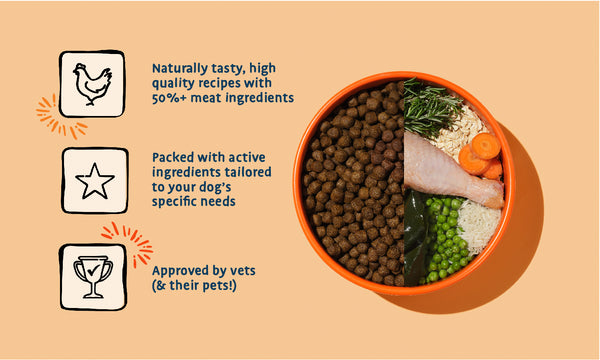
Our new range is all about being even more tailored and even tastier, with each recipe featuring 50% or more freshly prepared ingredients and garden veggies, along with active ingredients carefully customised to your dog's unique needs. We believe that every dog deserves food that truly cares for them – it's not just a meal, but a gesture of love!
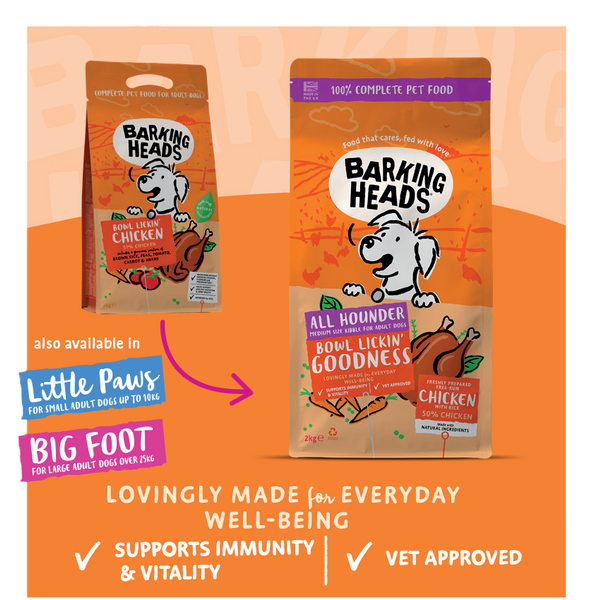
To make it easier to find the right food for your pup we've simplified the range based on the following breed sizes. If you're still unsure on the best food for your pup, why not try our handy quiz?

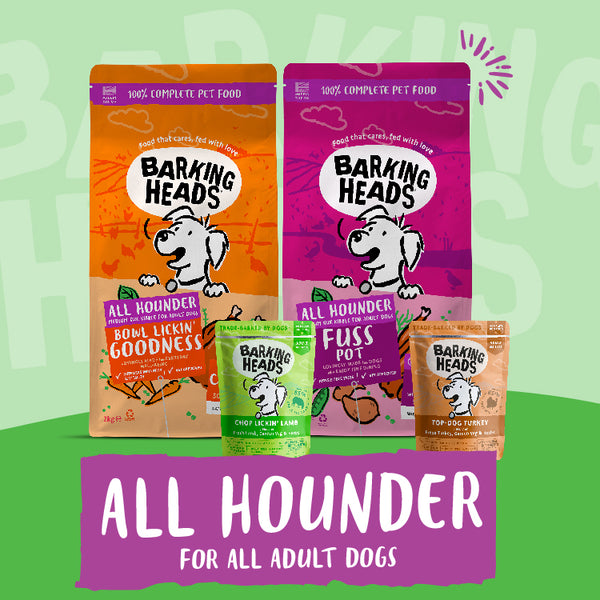

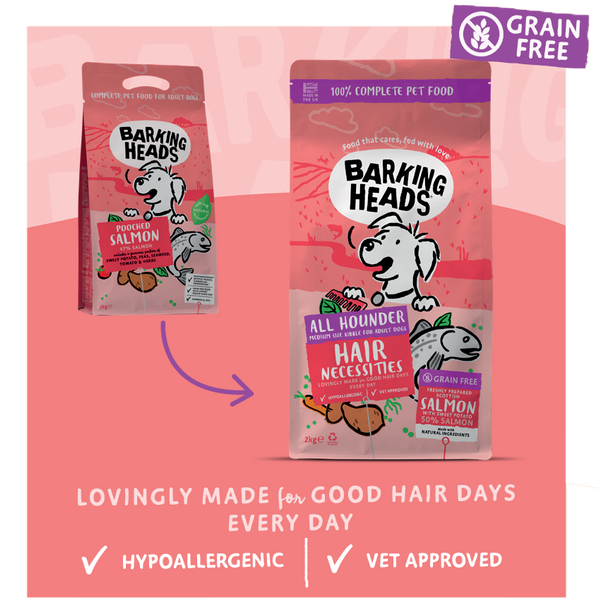
Each breed size has a range of specialist products developed to care for the specific needs of your furry family member. All approved by vets (and our pets!)
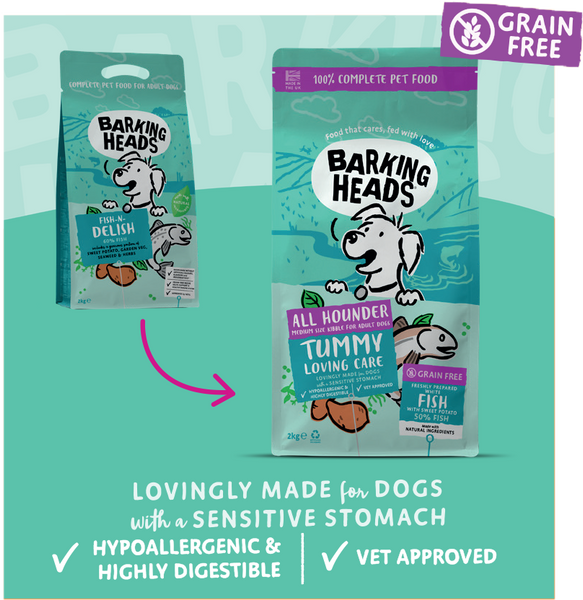
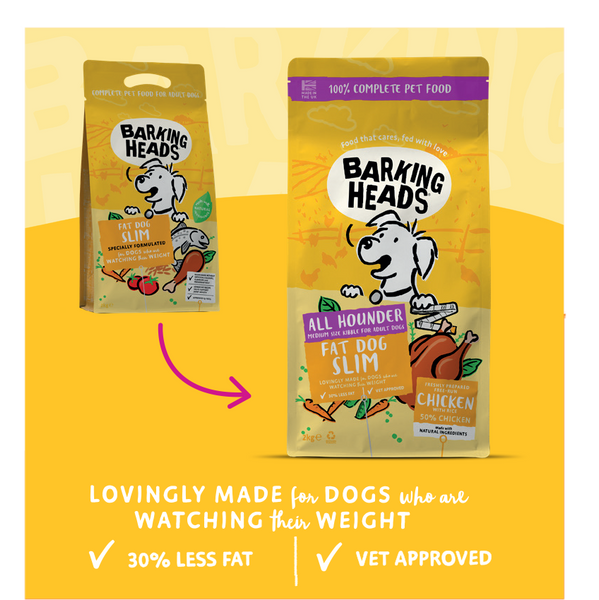

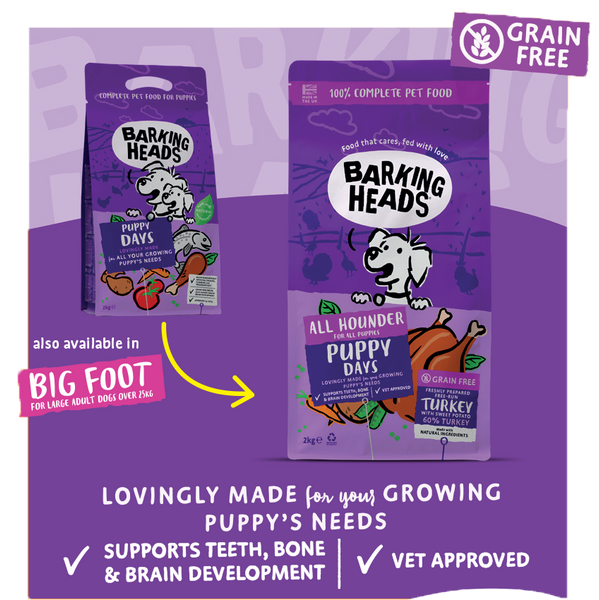

But our commitment to providing top-notch nutrition doesn’t stop there... We're also stepping up our eco-friendly game with recyclable packaging and carbon-negative cooking in our factory here in the UK (Yorkshire to be specific)!
Shop our tastier, more tailored, new & improved dry dog food range in selected stores and online now!
Fibre is the quiet workhorse of your dog's bowl. Learn what fibre actually is, how much your dog needs, and, how to tell whether they're already getting it right.
Watching your dog hunch, strain, and produce little or nothing is genuinely stressful, and it's one of those moments where a clear head helps more than a panic. So here's the calm version. Mild constipation can often be eased at home with a bit more moisture, gentle movement, and the right diet. But if your dog is straining with little or nothing to show for it for more than a day, seems to be in pain, or has other signs like vomiting or a hard, swollen tummy, skip the home remedies and call your vet. Two things are worth sorting first, and they're simpler than they sound: is this actually constipation, and is it urgent or something you can safely support at home? Let's take them in order. Is it actually constipation, and not something else? Before you treat anything, it's worth checking that constipation is really what's going on, because a few things look very similar. Constipation means your dog is trying to poo but little or nothing comes out, often with hard, dry, pebble-like stools. If they can't pass anything at all, vets call that obstipation (simply a more stubborn, backed-up version of the same thing). You might also spot straining for longer than usual, trying several times over, whining while they go, or a little mucus. Two things are easily mistaken for it: Straining to wee, not poo. These can look almost identical, especially in female dogs. As a rough guide, dogs tend to hold their tail up when trying to poo and down when weeing (PDSA, 2023). Diarrhoea. Confusingly, a dog with a runny tummy can also strain and squat repeatedly, so you may think they're blocked up when the opposite is true (Vets Now, 2024). If you'd like a fuller picture of what healthy and less-healthy poo looks like, our expert guide to your dog's poo breaks it all down. Why do dogs get constipated? Constipation usually comes down to something slowing the gut or making poo harder to pass. Common causes include: Not drinking enough water, which lets stools dry out and harden. Too little fibre, or occasionally too much. Not enough exercise, since movement helps keep things moving. Swallowing things they shouldn't, such as bits of bone, hair, or non-food objects. Matted fur or anal gland trouble around the bottom. Pain or stiffness that makes squatting uncomfortable, which is common in older or arthritic dogs. Stress, or a sudden change in routine. Some medical conditions, which is exactly why a check-up matters if things don't settle. Diet has an influence here, but it's rarely the whole story, so it helps to look at the bigger picture rather than blaming the bowl alone. Is it an emergency, or can I help at home? This is the part that matters most, and it's easier to judge than you might fear. Call your vet now if: Your dog hasn't managed to poo for more than a day or two, or is straining hard with nothing coming. They seem to be in real pain, or are hunched, restless, and unsettled. They're being sick, especially more than once. Their tummy looks bloated, or feels hard and swollen. You spot blood, or you think they've swallowed something that could cause a blockage. You’re just not sure - it’s better to be safe than sorry. Vets Now advise getting a dog checked if they haven't pooed for more than 24 hours (Vets Now, 2024), and PDSA make the sensible point that constipation can range from mild to serious, so when in doubt, a quick call is always the safer choice (PDSA, 2023). It's likely mild, and safe to support at home, if your dog is otherwise bright, eating and drinking normally, comfortable in themselves, and has simply had a brief, minor dip. Even then, if it hasn't improved within a day or so, give your vet a ring. Gentle things you can safely try at home If your dog is otherwise well and this looks mild, here are the safe, simple things to try first: Keep fresh water available at all times, and add a bit of moisture to meals with some wet food, a splash of water, or a little low-salt bone broth. Offer a small amount of plain, cooked pumpkin, a gentle source of fibre and moisture (our guide on whether pumpkin is safe for dogs covers how to serve it). Get them gently moving with a relaxed walk, as light exercise really can help things along. Keep toilet trips calm and unhurried, with plenty of chances to go somewhere they feel at ease. A few things we'd steer you away from doing at home: Don't give human laxatives, which can be genuinely harmful to dogs. Don't dose olive oil or other oils by the spoonful. It's a popular tip, but the amount really matters, and getting it wrong can cause other tummy troubles. Don't attempt an enema yourself, as that's very much a vet-only job. And it's always worth checking with your vet before adding any supplement, especially if your dog has another health condition. A quick word on fibre: more isn't always better It's tempting to assume that if fibre helps, loads of it must help more. It doesn't quite work like that. The right amount of fibre supports firm, regular poos, but piling it on can sometimes tip things the other way, with wind or looser stools. The goal is a complete, balanced diet with the right fibre for your dog, rather than a fibre free-for-all. Prebiotics can help here too. These are a particular kind of fibre that feeds the friendly bacteria in your dog's gut, and our guide to prebiotics for dogs explains how they work. For the wider picture on keeping digestion happy, our dog gut health guide goes a little deeper. Helping prevent constipation Most of the time, prevention comes down to a few steady habits: Keep water topped up and easy to reach, and think about adding moisture through wet food. Feed a complete, good-quality diet with balanced fibre and prebiotics. Try mixed feeding, stirring wet food through dry for extra moisture, something we love to call the ultimate doggie dinner. Our wet recipes are made for exactly this, and our Tummy Lovin' Care fish recipe is designed to be gentle on digestion. Keep up regular exercise, and give plenty of toilet opportunities through the day. Help your dog stay a healthy weight, since carrying extra weight can make things harder. If you do change their food, take it slowly. We always recommend switching over a 2 week period starting with 10% new food, 90% current food, and gradually increasing the new food. When to see your vet If you're ever unsure, lean towards calling, and try not to wait days hoping it clears on its own. It really helps your vet if you can tell them a few things: When your dog last pooed, and what it looked like. Whether they might have eaten anything unusual. Any other signs, such as vomiting, low energy, or going off their food. Constipation can occasionally be the first sign of something more serious, so getting advice early is always the safest route, and usually the quickest way back to a comfortable dog. FAQs How long can a dog safely go without pooing? Most healthy dogs poo between one and three times a day, so a full day without is worth noticing. As a general guide, if your dog hasn't pooed for more than 24 hours it's worth a word with your vet, and longer than that, or with any other signs, is a clear prompt to call (Vets Now, 2024). Puppies and older dogs are best checked a little sooner. Can I give my dog olive oil or coconut oil for constipation? We'd gently point you towards your vet rather than reaching for the oil. It's a very common home tip, but the right amount is easy to get wrong, and too much oil can cause an upset tummy or other problems. A quick chat with your vet is far safer, and they can suggest something suitable if your dog genuinely needs it. Does pumpkin really help a constipated dog? For a mild case, a little plain pumpkin can help, thanks to its gentle fibre and moisture. Use plain cooked or tinned pumpkin, never pie filling, which has added sugar and spices, and keep it to a small amount. It's a nice nudge for the odd sluggish day, but it won't shift a real blockage, so it's no substitute for a vet if things don't improve. Can stress make my dog constipated? It can, yes. A dog's gut and brain are closely linked, so a stressful event or a change in routine can sometimes throw digestion off, constipation included. Keeping things calm and predictable, with a steady toilet routine, usually helps it settle. How can I tell if it's constipation or a blockage? A blockage tends to come with bigger warning signs, and it's an emergency. Alongside not pooing, watch for repeated vomiting, a bloated or painful tummy, weakness, and refusing food. If you notice those, or you think your dog has swallowed something they shouldn't, call your vet straight away rather than trying anything at home. Can puppies get constipated? They can, though an upset tummy is more common in puppies than a blocked-up one. Because puppies usually poo more often than adult dogs, a noticeable drop is worth keeping an eye on. Make sure they're drinking, keep their meals consistent, and check with your vet sooner rather than later, as little ones can go downhill faster than adult dogs.
What genuinely helps is a complete, good-quality diet that produces firm, well-formed poos, fed in the right amount to keep your dog at a healthy weight.
Follow us @barkingandmeowingheads or tag us in your images #barkingheads


